Tower Rush Official Guide 2026 with Strategy Tips
Tower Rush Tower Game – Official Guide & Strategy 2026
This guide goes deeper. Not the basics, but what comes after the first 20 rounds: When to cash out? How much to risk? Which mistakes to avoid? And why psychology is more important than the multiplier when cashing out.
Game Mechanics – The Most Important at a Glance
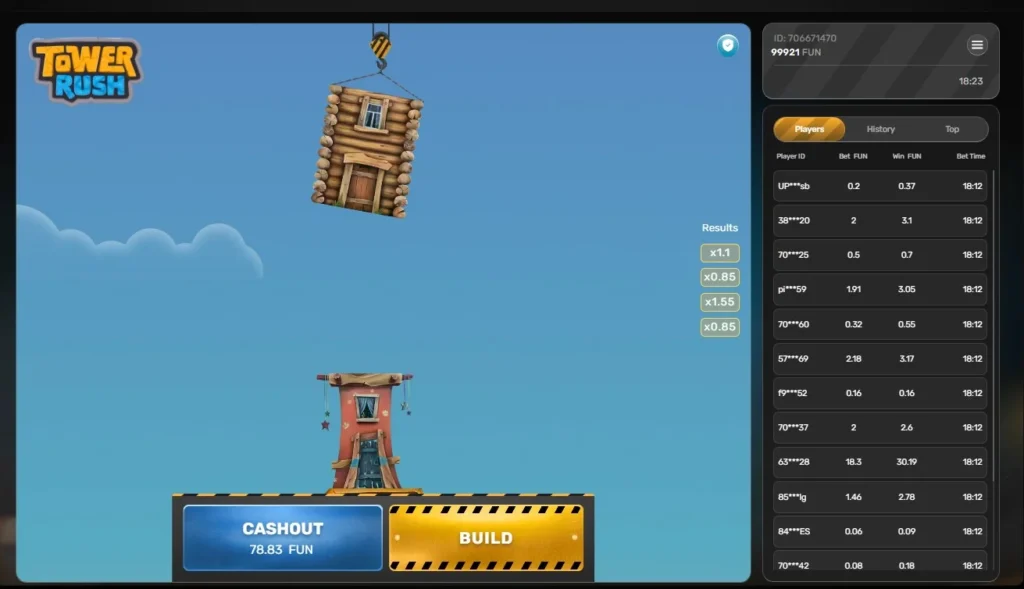
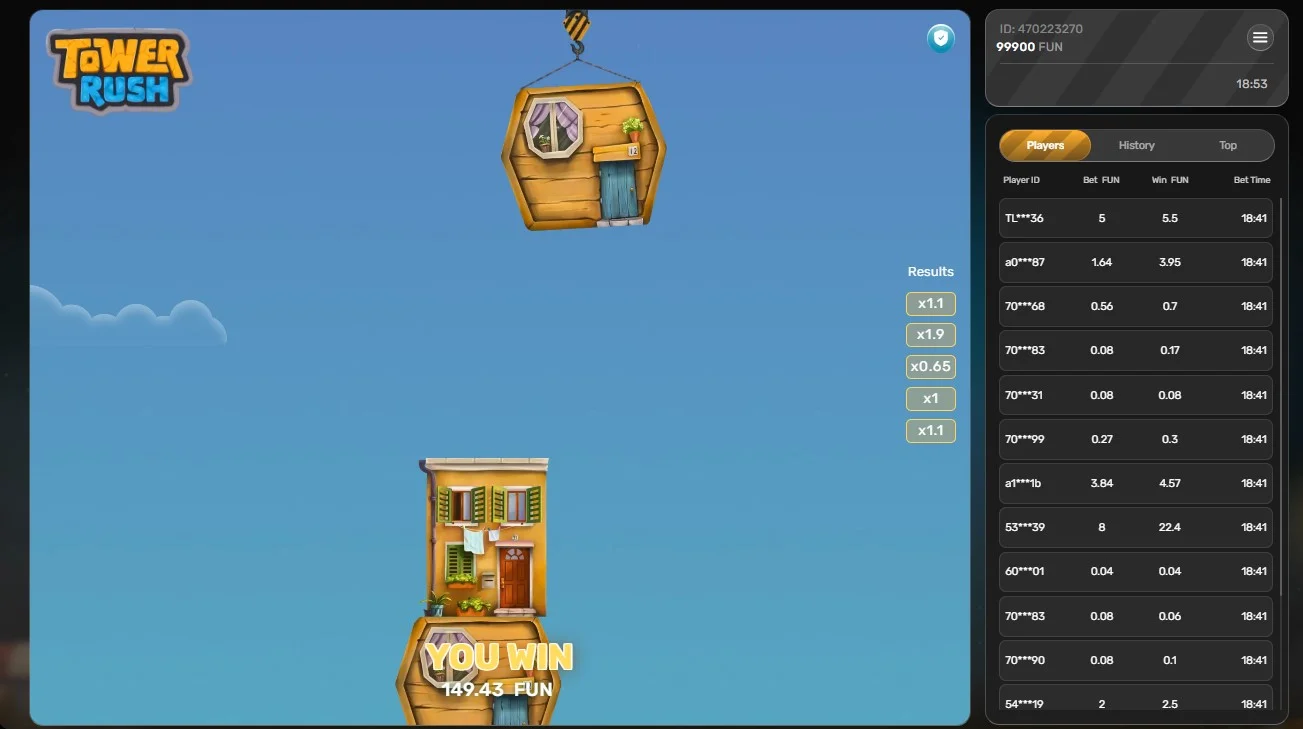
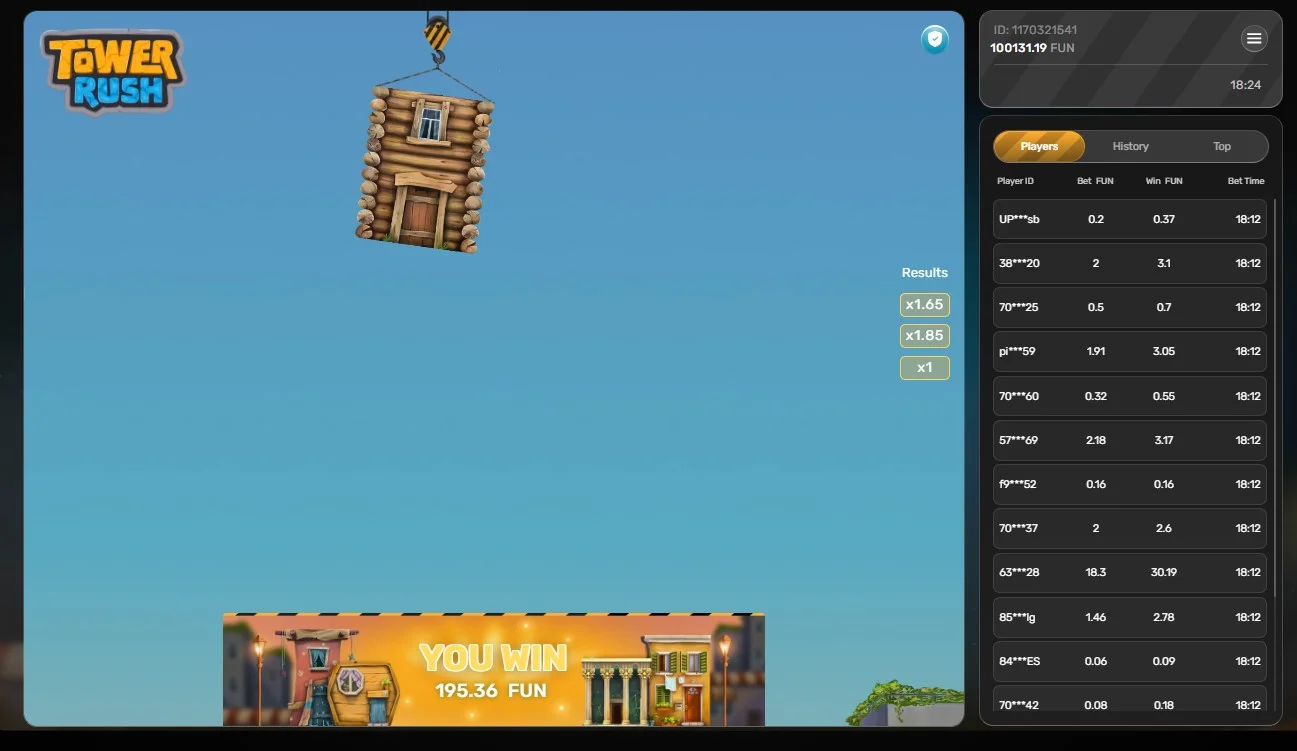
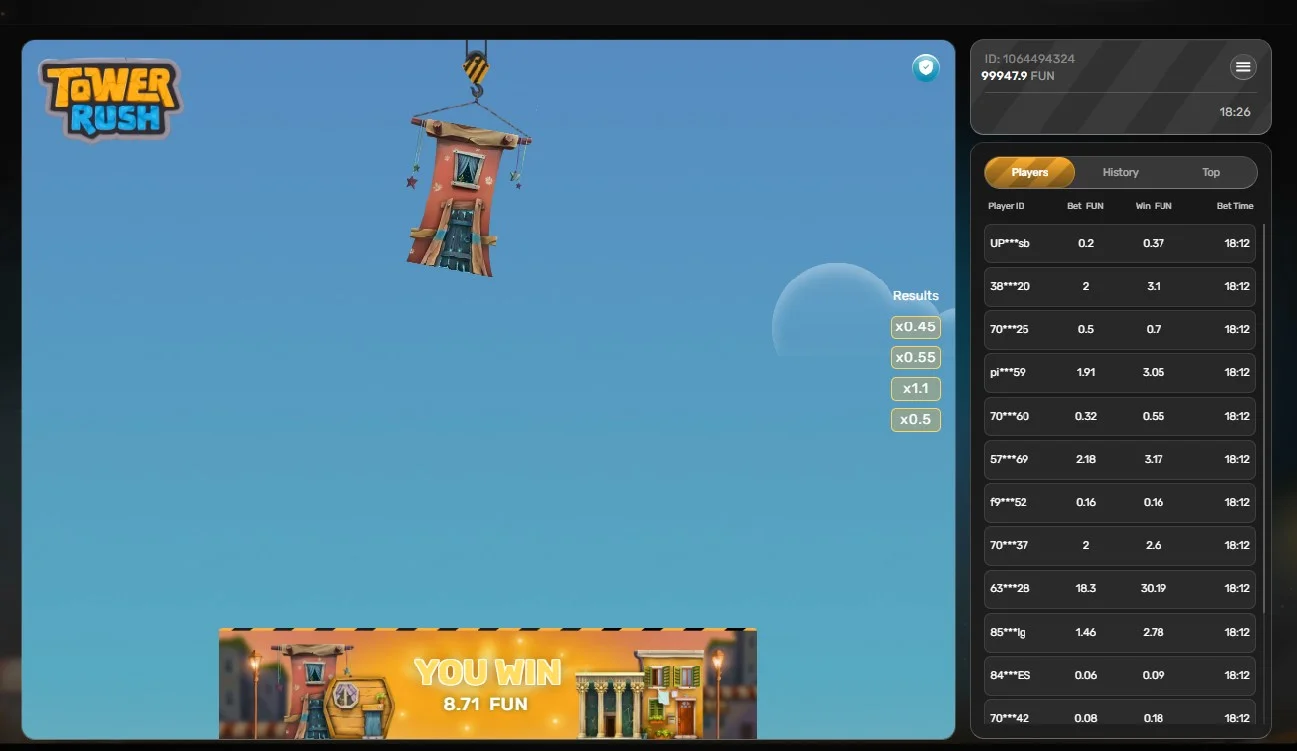
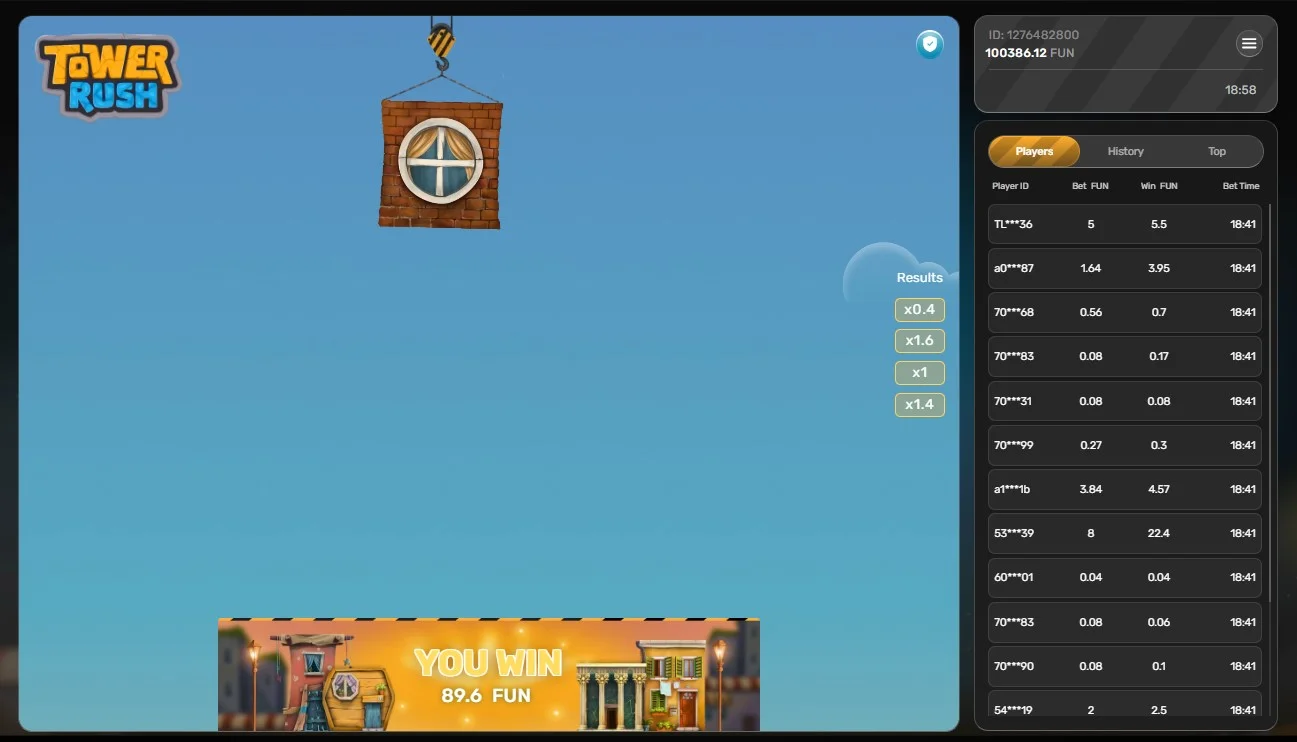
Before each round, you set the stake. Then you press BUILD. A block falls from above, swinging sideways over the top of the tower. You place it by clicking. If it fits, the tower grows. If it misses, everything tips over. CASHOUT is available at any time.
The difficulty increases with each floor. The blocks move faster, the tolerance decreases. From floor 8, a small offset is enough, and the tower is gone.
So far the basic principle. Now to the actual topic.
Strategy 1: The Conservative Approach
The simplest strategy. And probably the most profitable in the long run.
The principle: Set the same goal for each round – cash out at floor 4 or 5. The multiplier is then between x1.6 and x2.5. No big jumps, but constant small wins. Tower collapses happen rarely this early, so you lose fewer rounds.
When does this make sense? When playing with a small budget. When just starting out. When wanting to stabilize the balance after a losing streak.
What you sacrifice: The chance for high multipliers. x8, x15, x30 – that doesn't exist at floor 4. Those seeking that thrill need a different approach.
My experience with it: In 20 conservative rounds with a €1 stake, I successfully cashed out 14 times at floor 4 or 5. Six times the tower tipped over beforehand – mostly at floor 2 or 3. Final result: slightly in the plus. Not spectacular, but stable.
Strategy 2: The 70/30 Mix
My personal favorite. 70% of the rounds conservative (cash out at x2 to x3), 30% aggressive (target above floor 8).
Why 70/30? Because the conservative rounds stabilize the balance. And the aggressive rounds keep the chance for larger wins open. The mix maintains the balance between safety and excitement.
How do I implement this? I simply count along. Rounds 1 to 7: conservative. Rounds 8 to 10: aggressive. Then start over. No complicated formula, no system. Just a rhythm that prevents you from adding "one more floor" in every round.
What happens in the aggressive round? Most of the time, you lose the tower. In 10 aggressive rounds, I reached floor 8+ three times. The rest: tower collapse at floors 5 to 7. But the three successful rounds more than compensated for the losses of the seven others. Once, the triple build came in at floor 7 – that was an x11 cashout.
Strategy 3: Session-based playing
This is less a game strategy and more a mindset. But perhaps the most important of all approaches.
The rules:
- Set a budget before the session. For example, €20.
- Determine the maximum number of rounds. For me: 25 rounds.
- Set a profit target. For example: stop at €10 profit.
- Set a loss limit. When the budget is gone, it's over. No reloading.
Sounds obvious? It is. Yet hardly anyone sticks to it. Because after round 20, the mind gets tired and you still play "one last round." Tower Rush makes this particularly difficult because the rounds are so short. 15 seconds per round – you don't think much before you hit BUILD. And that's where the most expensive mistakes happen: not due to bad timing, but due to poor self-control.
My tip: set a timer on your phone. 15 minutes. When it rings, it's over. No matter how the session is going.
The five most common mistakes
Mistakes I have made myself or observed in others. In no particular order.
Always aim for high multipliers. The allure of x10 or x20 is great. The problem: the success rate drops drastically from floor 8 onwards. Those who play for x10 in every round lose the most rounds. The few wins rarely make up for it.
Increasing the stake after losses. Martingale logic. Doesn't work in Tower Rush because the volatility is too high. Three to five tower collapses in a row are normal. Those who double after each loss quickly reach the table limit or their own budget.
Playing on when tired. From round 25 to 30, I clearly notice that my reaction time decreases. The blocks in the upper floors require precise timing. Fatigue and loss of concentration cost floors – and thus money.
Ignoring the Frozen Floor. Some players cash out immediately when the Frozen Floor appears. But that is exactly the moment when you can continue building risk-free. The profit is secured, so you can comfortably add a few more floors.
Start without demo. Tower Rush looks easier than it plays. The demo is free and shows how the timing works within 15 minutes. Jumping in with real money means paying for the learning curve with your own balance.
All five mistakes have one thing in common: They happen when you stop thinking and start playing by feel. Tower Rush looks like a reflex game, but it is actually a decision game. The best rounds are the ones where you already know what you're doing before the click.
Cashout psychology – why timing is so difficult
Tower Rush is technically simpler than many other games. Blocks fall, you click, done. The real challenge is not the mechanics. It’s the decision.
At level 6 with x2.5 you think: "One more level. x3 would be better." At level 7 with x3.2: "One more, then cash." At level 8: "I've never gotten this far..." And then the block falls next to it. Round over. The multiplier was already good enough, but you wanted more.
The pattern repeats itself. It has a name: loss aversion. The fear of missing out on a potential gain weighs heavier than the joy of a sure win. And Tower Rush exploits this perfectly. Each level makes the next step more tempting.
What helps against this: decide before the round. Not during. If you say before the BUILD click "I cash out at level 5," then you stick to it. No matter what the multiplier shows. That trains discipline.
At some point, I put a note next to the screen. It only said: "Cash out at x3." It helped. Seriously.
Use bonus levels strategically
You can't force bonus levels – they appear randomly. But you can react to them better.
Frozen Floor: When it comes, don’t cash out immediately. The win is secured. So keep building and see how far you can go. This is the only moment in the game where you can go higher without risk. Many players miss this because they reflexively hit CASHOUT.
Triple Build: Three free levels. The multiplier jumps up three levels. If it comes at level 5 or 6, that’s a real boost. After that, you can decide whether to take the new, higher multiplier or keep building.
Temple Floor: Nice extra, but no reason to change the strategy. The lucky wheel gives an additional multiplier, which usually ranges between x1.1 and x2.3. You take what comes.
How often do the bonuses appear? In my sessions, the Frozen Floor came on average every 6 to 8 rounds. The Triple Build every 12 to 15. The Temple Floor even less frequently. But that varies – randomness is randomness.
Desktop vs. mobile – where does it play better?
| Criterion | Desktop | Smartphone |
|---|---|---|
| Block precision | High (mouse click) | Medium (touchscreen) |
| Control | Mouse, precise | Thumb, less precise |
| Reaction time | Faster | Slightly delayed |
| Comfort | Needs a desk | Playable everywhere |
| Screen size | No problem | Okay from 6 inches |
For the lower floors (1 to 7), it hardly makes a difference. The touchscreen precision is sufficient. From floor 8 or 9, you notice the difference. On the desktop, you hit more often. On the phone, the block shifts by half a millimeter, and that's enough to tip the tower.
My recommendation: If you regularly build beyond floor 8, you should play on the desktop. If you pay out at x2 to x4, you can easily do that on the phone.
Player impressions from the community
Frequently Asked Questions
No. Tower Rush is a casino game with a house edge. In the long run, mathematics wins. Strategies help manage the bankroll and improve the gaming experience – they do not guarantee winnings.
Best not at all during a session. If at all, then after several successful sessions and with a clearly higher budget. Increasing the stake after losses is the quickest way to empty the bankroll.
Between 15 and 25. After that, concentration drops. Tower Rush requires precise timing, and tired clicks cost floors.
Definitely. 15 to 20 demo rounds are enough to learn the timing and find your own cashout limit. This saves real money when playing for real.
First: do not increase the stake. Second: take a break. Three to five tower crashes in a row are normal with high volatility. This is not a streak of bad luck, it’s mathematics. Someone who stops after five lost rounds and continues the next day makes better decisions than someone who frustratedly plays “one more round.”
No. The RTP is independent of the stake. Whether you bet €0.10 or €100, the mathematical house edge remains the same.

Nico Koch
iGaming strategist & expert in behavioral psychology
Conclusion: Strategy does not replace chance – but it helps
Tower Rush is not a game that can be "beaten" with the right strategy. The RNG decides when the tower falls, when bonuses appear, and how the multiplier develops. That is a fact.
What strategy brings: better bankroll management, fewer impulsive decisions, longer sessions, more fun per euro. Those who play with a system maintain their balance longer and have more rounds in which something good can happen.
My advice after hundreds of rounds: Start conservatively. Try the 70/30 mix. Set session limits. Use the frozen floor when it comes. And stop when the timer rings.
Rating: 4.2 out of 5.
Tower Rush does many things right. The active player involvement, the stress level, the short rounds. What is missing: a bit more bonus frequency and better touchscreen control for the upper floors. For a crash game with depth, Tower Rush is one of the better options currently available.
One last thought: Tower Rush does not reward the player who risks the most. It rewards the player who plays the most consistently. Those who stick to their plan, take breaks, and use the frozen floor instead of cashing out in panic – they will benefit more from the game in the long run. Not more profit (that is determined by mathematics), but more good rounds per euro.
Playing should be fun, not a problem. If you notice that control is slipping: BZgA hotline 0800 1 37 27 00 – free, anonymous, available 24/7.